

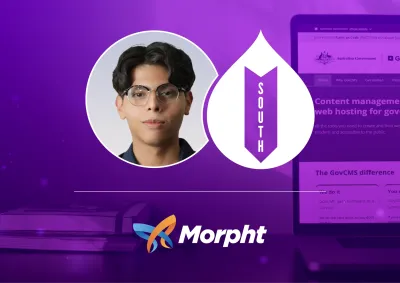
David Flores-Condezo presented insights from various government agencies, highlighting how they tackled common but complex GovCMS requirements at the DrupalSouth Community Day, held in Canberra on Thursday 14 November 2024.
Why Drupal suits complex organisations

Control over your content
Structured content and flexible editorial workflows let many teams publish safely, with approvals built in.

Security you can verify
A dedicated security team, public advisories, and regular releases. Drupal is trusted by governments worldwide.

No vendor lock-in
Open-source licensing and a large supplier market mean you choose who builds and supports your site.
Frequently asked questions
Drupal wins decisively on security, compliance, and complex content architecture. Its permission system, security update cadence, and structured content model make it the default choice for regulated industries including government, finance, and healthcare. WordPress is faster and easier to deploy for simpler sites and marketing-led organisations, but its plugin ecosystem introduces significant security governance overhead at scale. For Australian government agencies in particular, Drupal's alignment with GovCMS and government security frameworks provides a compliance pathway that WordPress cannot match out of the box.
Drupal provides comparable enterprise capability to SiteCore and Adobe Experience Manager (AEM). Including personalisation, multilingual content, structured workflows, and API-first delivery - at a fraction of the licensing cost. AEM enterprise deployments typically run from low-to-mid six figures annually in licensing alone before implementation. Sitecore carries similar commercial overhead. Drupal is fully open source with no per-seat or per-usage licensing, making it the most cost-effective path to an enterprise-grade digital experience platform for organisations that don't want vendor lock-in.
Yes. Drupal's market share by volume appears smaller than WordPress because it deliberately targets the enterprise and government tier rather than the mass market. The January 2026 release of Drupal CMS 2.0 introduced Drupal Canvas (a visual drag-and-drop page builder), AI-powered page generation, and site templates, substantially improving the editor and marketer experience. The Drupal AI Initiative, backed by 30+ organisations and more than 50 contributors, has released a coordinated AI module with over 60 features, including an AI Observability module and Prompt Library. Drupal is actively investing in its future.
The Drupal AI Initiative launched formally in June 2025 and has grown to 30 sponsoring organisations, including Morpht, which joined as a Gold AI Maker. The 2026 roadmap covers eight capability areas: AI-assisted page generation, context management (brand voice and governance rules for AI), background agents that automate content tasks, design system integration, content creation and discovery, advanced governance with audit trails, intelligent website improvement driven by performance data, and AI search. Drupal's structured content architecture, the same quality that makes it trusted for government, turns out to be exactly the foundation AI needs to be trustworthy and auditable.
Drupal has built-in multilingual support that is considered industry-leading among open-source CMS platforms. It supports content translation, interface translation, language detection, and right-to-left language layouts, all natively, without third-party plugins. For Australian government agencies with obligations under the Language Services Policy or serving multicultural communities, Drupal's multilingual architecture is a significant advantage over platforms that bolt multilingual capability on via third-party modules.
Drupal is architected around structured content, allowing organisations to define content types, fields, taxonomies, and relationships that reflect their actual information architecture rather than forcing content into a one-size-fits-all model. This structured approach makes Drupal's content highly portable; it can be served via REST or GraphQL APIs to websites, apps, digital signage, and other channels. It also makes AI integration more trustworthy because AI systems can work with well-defined, governed content rather than unstructured blobs.
Yes. We start with a site assessment covering code, modules, content, and hosting. You get a clear report of risks and priorities before any work begins.
Latest insights
Article
GovFlix is a website showcasing video content for government and web development. A “behind the scenes” presentation was recently given at DrupalSouth Community Day 2024.

Article
Morpht is proud to sponsor and be part of DrupalCon Singapore 2024! From 9-11 December, join us for three days of innovation, collaboration, and all things Drupal.
Article
The Drupal Metatag module has been extended with a new submodule called Custom Meta. Custom Meta opens the way for the flexible definition of tags which can be used to drive custom applications outside the typical SEO requirements of a site.
Article
As Drupal 7 nears the end of life on the 5th of January 2025, website owners need to consider the next steps for their site.
Article
The Drupal Starshot initiative will lead to many benefits including a better experience for site builders, more rapid site development and also a boost for the Drupal user base and community.

Case study
Morpht rebuilt the Department of Defence's DATE website around user journeys, with a new Tactics Hub. Half of its traffic now comes from overseas partners.

Article
Kelvin Wong shares some useful tools for building sites with Twig. How templates can be structured to maintain consistency across content types while allowing room for customisation on individual needs.

Article
Morpht had a great time at DrupalSouth Sydney 2024! As always, it was an amazing event connecting, collaborating and learning with the Drupal community.

Article
Morpht are honoured to have received two awards at the Splash Awards 2024 for the National Office of Child Safety site in the Government - Federal category and Best in Show!

Article
Search API Field Token module functionality has been merged in Search API 8.x-1.30, and the Search API Field Token module reached End-of-life on 30 November 2023

Article
Your questions answered from the 'Are you talking to me? Personalisation on the TGA website' presented at GovCMS Mega Meetup 2023.
Article
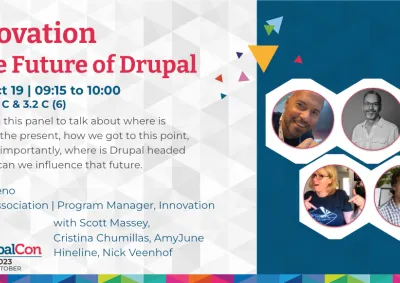
At Drupalcon Lille, I was on a panel that discussed the importance of marketing and innovation in the Drupal ecosystem. Innovation and a passionate Drupal community will be crucial for a game-changing approach.
Article
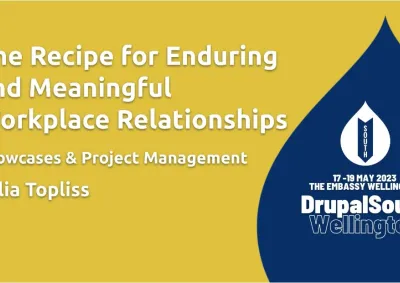
Workplace culture plays a pivotal role in the success of an organisation. In our world, it has an important effect on everything from project success to employee retention. However, creating and maintaining a positive work environment is often easier said than done.

Article
Drupal launched the latest version Drupal 10 on 15th December 2022. Upgrading to Drupal 10 will bring new features, better security, and performance boost to the project.
Article
Morpht has supported the development of the Ayrshare module - an integration using a powerful API that effortlessly enables you to send social media posts.

Article
Morpht has developed the Quickchat Drupal module to allow for easy integration into Drupal, making it possible for editors to train the chatbot with content from within the CMS.

Article
Unlock geo personalisation features for your Drupal site by using Cloudflare workers to augment the request with geodata.

Article
A new contributed Drupal module allows site builders to add custom HTML pattern attribute to the text fields in the Manage Form Display settings page.
Article
The Drupal Search API Field Token module allows to send data into search index using tokens.

Article
Calendar Links Token is a simple module for displaying calendar invites via Tokens in Drupal.

Article
Both the Group and Scheduled Transitions are powerful modules in the Drupal ecosystem. Group Scheduled Transitions brings them together.

Article
The Personified module is a personalization solution for Drupal providing a way to query and transform data from Drupal based on the client state.